


Desert Worm Idle RPG
4.4121.00 Reviews
App Specs
- Version
- 0.7.2
- Updated On
- License
- Free
- Downloads
- 100,000+
- Developer
- MULTICAST GAMES
- Categories
- Arcade
- Platform
- Android
Screenshots

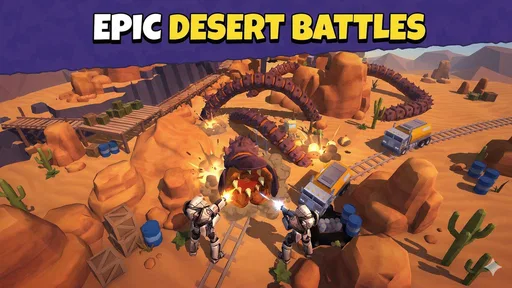
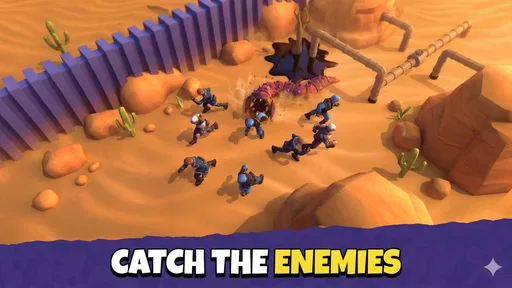
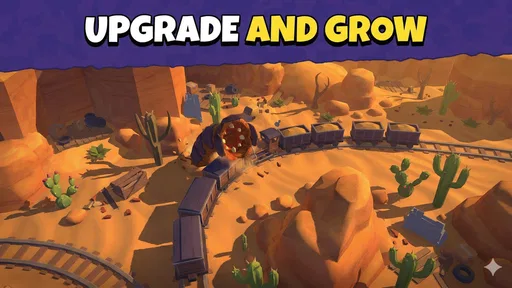
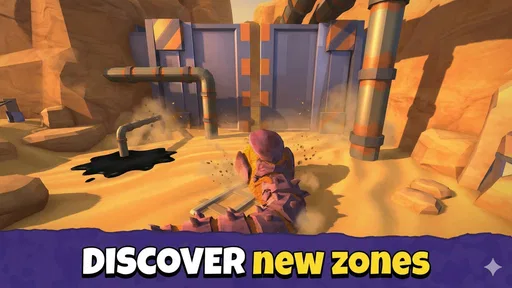
 Analysis by AppCompare
Desert Worm Idle RPG caught my attention because it puts one clear idea at the center: an arcade worm that keeps progressing while I decide when to act, upgrade, and explore. That combination makes it easier to pick up than a traditional role-playing game, but it still gives me enough choices to make each short session feel purposeful. I played it as a game for quick breaks rather than a long, uninterrupted adventure, and that is where it makes the strongest impression.
Developed by MULTICAST GAMES, this free arcade title is built around enemies, upgrades, and movement through a desert setting. It is rated Teen, and the current version is 0.6.2. The game has already passed 100 thousand installs, with a 4.4 average from roughly 3.2 thousand ratings, which suggests that its straightforward loop is connecting with a solid group of players.
Why the idle worm concept matters
The most important capability here is not simply that the worm can fight or grow. It is the way idle progression changes how I approach the game. Instead of demanding constant attention, Desert Worm Idle RPG lets me treat progress as something I check, guide, and improve in small decisions. That makes the game feel closer to a pocket routine than a conventional arcade campaign.
In a standard arcade game, stopping usually means losing momentum or ending a run. In a more traditional RPG, progress often requires a longer commitment: quests, menus, equipment screens, and repeated battles. This game sits between those styles. I can engage with the action, make an upgrade choice, and step away without needing to reserve a large block of time.
That design is especially useful when I want something more interactive than a passive idle game. The worm is not just a number rising in the background. Enemies and exploration give the progress a visible context, while upgrades provide a reason to return and think about what to improve next. The real strength is the reduced pressure to play continuously, not the promise of endless complexity.
I would not describe it as a replacement for a deep role-playing game. Its appeal comes from compression: the familiar satisfaction of becoming stronger is delivered through a smaller, more approachable loop. If you enjoy carefully managing a large inventory, building a detailed character, or following a story with substantial dialogue, this will probably feel lightweight. If you like seeing a character develop without having to repeat lengthy missions, the format is much more inviting.
Progress works best when I treat it as a routine
My most useful way to play was to divide each visit into three questions. First, what did the worm gain since the last check? Second, which upgrade helps with the next obstacle rather than merely looking attractive now? Third, is there a reason to continue exploring immediately, or is this a good point to leave and return later?
Worth Reading Before You Choose

EA SPORTS FC Mobile 26 Is a Bigger Football Game, but It Takes Time

Flipboard Shows What News Apps Must Do Beyond the Feed

Switching to Android Auto Means Rethinking Your Driving Routine

Google Calendar Makes a Crowded Week Easier to Manage

Ludo King Makes the Most of the Minutes Between Plans

Baby Panda World Brings Quick Play to Modern Phones, but Its Game Library Feels Busy
That small routine prevents the game from becoming a sequence of random taps. Idle systems can sometimes encourage players to collect rewards automatically and spend them without thinking. Here, the arcade setting makes those choices feel more connected to the next encounter. I found it more satisfying to pause before upgrading and consider whether I needed stronger survival, faster progress, or a more reliable way to deal with enemies.
This is also where the game differs from a purely automatic clicker. The desert setting and worm theme give the numbers a sense of place. I am not only watching a meter fill; I am checking whether the current level of strength is enough to make the next stretch worthwhile. That connection is modest, but it gives the idle loop more personality than a bare upgrade menu.
One practical tip is to avoid spending every available resource the moment it appears. Early improvements can feel rewarding, but holding back briefly lets me compare the effect of a larger upgrade with several smaller ones. I also prefer to return after a short absence with a plan instead of opening the game repeatedly just to collect whatever is ready. That keeps the idle element useful rather than turning it into a chore.
Short sessions are the natural use case
The best everyday scenario for me is a ten-minute break between tasks. I can open the game, collect accumulated progress, review the current enemies, make one or two deliberate upgrades, and explore until the next decision point. I do not need to remember a complicated quest chain, and I can stop without feeling that I have abandoned a long mission.
The same pattern works during a commute or while waiting for an appointment, provided I want a game that asks for occasional attention rather than uninterrupted concentration. The idle structure gives me a reason to check in, while the arcade action gives the visit a little more energy than simply claiming a daily reward.
It is less suitable for moments when I want a fully absorbing game session. If I have half an hour and want precise controls, intense timing, or a competitive challenge, a dedicated action arcade game will probably provide more excitement. Desert Worm Idle RPG is better when my attention is divided or my available time is uncertain.
Parents and younger players should also take the Teen rating seriously. The rating does not automatically make the game unsuitable for every teenager, but it means I would check the store context and the player’s comfort level before handing it to a child. The game’s simple presentation may look accessible, yet the age guidance should remain part of the decision.
What the loop feels like in practice
The basic rhythm is easy to understand: the worm advances, enemies create resistance, and upgrades help turn future encounters in my favor. Exploration gives the progression somewhere to go, so returning to the game is not only about increasing a number. I am looking for the next point at which my improvements make the desert feel more manageable.
I like this structure because it gives each session a beginning and an end. The beginning is the reward check and upgrade review. The middle is the active push through enemies or exploration. The end comes when progress slows, the next improvement feels too expensive, or I simply have finished the time available. That natural stopping point is valuable for a mobile game.
There is also a useful distinction between immediate satisfaction and long-term planning. A small upgrade may help me right away, while saving for a more meaningful improvement may make the next return more productive. The game does not need a huge skill tree to create that decision. Even a limited set of choices can be interesting when the player understands what problem each improvement is solving.
My advice is to judge upgrades by the obstacle in front of the worm, not by the largest number displayed in the menu. If enemies are preventing further exploration, a defensive or reliability-focused choice may be more useful than a purely offensive one. If survival is comfortable but progress feels slow, then a faster route forward may matter more. This approach makes the game feel less automatic and helps prevent wasted resources.
The tradeoff between convenience and depth
The same simplicity that makes Desert Worm Idle RPG approachable also limits its reach. I can understand the central loop quickly, but players who expect a broad RPG system may eventually want more variety in builds, encounters, or long-term objectives. The game works because it keeps the number of decisions manageable; adding too much complexity would undermine its quick-session identity, but staying too simple may reduce its staying power for expert players.
Free access is another part of the equation. The game costs nothing to start, while in-app purchases range from $1.99 to $99.99 per item. I see that as a reason to decide in advance how I want to play. The most comfortable approach is to treat purchases as optional acceleration rather than as part of the core routine. Players who dislike any temptation to spend should be cautious, especially when an idle game makes waiting and upgrading central to its design.
I also think the idle format can create a subtle feeling of obligation. Once I know progress is waiting, I may feel pushed to check in even when I would rather be doing something else. My solution is simple: I play at chosen times and avoid turning every available reward into a required appointment. The game is more enjoyable when its convenience serves me, rather than when I serve the timer.
Compared with a standard arcade game, this title is less demanding and less immediately skill-driven. Compared with a conventional idle RPG, it has a more active arcade identity because enemies and exploration give my decisions a clearer moment-to-moment purpose. Compared with a clicker, it offers a stronger sense of a character moving through a world, even though the overall progression remains compact.
That comparison also clarifies who should skip it. I would not recommend it to someone seeking a story-heavy adventure, a precision platformer, or a multiplayer contest. I would also hesitate to suggest it to players who find repeated upgrade loops dull. The game’s appeal depends on enjoying gradual improvement and accepting that not every visit will deliver a dramatic breakthrough.
Who gets the most from the worm
The ideal player is someone who likes progression but has an unpredictable schedule. You can make meaningful progress in a short visit, leave, and return later without needing to reconstruct a complicated plan. It is also a good fit for arcade fans who want something gentler than a reflex-only game and for RPG players who enjoy upgrades without a heavy commitment to menus or narrative.
It may appeal to people who enjoy optimizing small choices. The interesting part is not simply collecting everything available; it is deciding when to push exploration, when to improve the worm, and when to stop. That gives the game a quiet strategic layer beneath its accessible presentation. I found that especially satisfying when I resisted the urge to spend immediately and waited until the next obstacle made the priority clearer.
Players who prefer complete control over every second of play may find the idle foundation frustrating. So may anyone who wants a clear finish line rather than an ongoing progression loop. The game is designed around returning, improving, and returning again. That is a strength for routine players, but it can feel repetitive if your favorite mobile games are built around one-off levels or a definite campaign ending.
The Teen content rating is another point to consider for families. I would not rely on the colorful worm premise alone when deciding whether it suits a younger player. For teenagers and adults who enjoy arcade progression, the rating is less of a barrier, but it still belongs in the initial choice rather than being ignored after installation.
Small habits that make each session better
I recommend beginning with a quick inspection rather than tapping through every available reward. Look at the current challenge, identify what is slowing the worm down, and then spend only what supports that goal. This creates a clearer connection between progress and action, and it reduces the sense that upgrades are just automatic maintenance.
I also like using separate kinds of sessions. On one visit, I focus on collecting and upgrading. On another, I focus on exploration and see how far the current build can go. Keeping those purposes separate makes it easier to notice whether an upgrade is genuinely helping. It also gives short sessions a distinct shape, which matters in a game designed for repeated returns.
Finally, I would avoid judging the game by one unusually slow visit. Idle progression naturally includes periods where the next improvement takes patience. If the loop still feels satisfying when progress is incremental, the game has probably found the right audience for you. If waiting feels like the main activity, no amount of theme or upgrades will make it a good fit.
My recommendation after playing
Desert Worm Idle RPG is a focused arcade game for players who want an upgrade loop that respects short, interrupted sessions. MULTICAST GAMES keeps the central idea easy to grasp: guide a growing worm through enemies and exploration, then use progress to prepare for what comes next. I appreciate that the game does not require me to treat every session as a major event.
It is not the deepest RPG, the most demanding arcade challenge, or the best choice for anyone who dislikes idle mechanics. Its value comes from the middle ground. I can engage with the worm when I have a few minutes, make a practical improvement, and leave with a clear reason to return. The free entry makes it easy to try, while the available in-app purchases mean I would play with a spending limit in mind.
With a 4.4 average and more than one hundred thousand installs, it has found an audience for this compact formula. My recommendation is strongest for busy players who enjoy gradual optimization and want an arcade game that does not punish them for putting the phone down. If that sounds like your kind of routine, the desert worm is worth a look. If you want precision, story, or constant action above all else, I would choose a different game in those categories instead.
Pros
- Simple idle progression makes it easy to play in short sessions.
- Distinct desert setting gives the game a memorable visual identity.
- Offline-friendly mechanics suit players with limited or no connection.
- Upgrades provide a steady sense of growth over time.
- Quick combat encounters keep the early gameplay accessible.
Cons
- Progress can become repetitive once the main upgrade loop is familiar.
- Idle rewards may feel slow without frequent upgrades or boosts.
- Limited strategic depth may disappoint experienced RPG players.
- Random events and rewards can make advancement feel inconsistent.
- The desert theme offers less variety than games with multiple regions.
FAQs for Desert Worm Idle RPG
What is Desert Worm Idle RPG?
Desert Worm Idle RPG is an idle adventure game set in a dangerous desert world where you develop and manage a powerful worm character. The main gameplay combines automatic progression, resource collection, upgrades, and battles against enemies. Even when you are not actively playing, your character can continue earning rewards, making it suitable for players who enjoy gradual progress without constant attention.
How does progression work in Desert Worm Idle RPG?
Progression is based on improving your worm through collected resources, equipment, abilities, and other upgrades available during the adventure. Battles and idle rewards help you become stronger over time, while more challenging areas generally offer better rewards. Players should expect a steady, incremental experience rather than instant advancement, so regularly checking the game and investing resources wisely is important.
Can Desert Worm Idle RPG be played offline?
The game may allow some idle or previously unlocked gameplay features to continue without a constant internet connection, but certain functions can require online access. Advertising rewards, cloud synchronization, updates, purchases, and other connected services may not work offline. Before relying on offline play, it is best to test the game on your device because requirements can vary by version and platform.
Is Desert Worm Idle RPG free to download and play?
Desert Worm Idle RPG can generally be downloaded without an upfront payment, but free access may include optional advertisements, in-app purchases, or both. These features can provide extra rewards, speed up progress, or unlock convenience items, although spending is not necessarily required to enjoy the basic gameplay. Parents should also review purchase settings if children use the device.
Is Desert Worm Idle RPG suitable for casual players?
Yes, the idle design makes Desert Worm Idle RPG accessible to casual players who prefer short sessions and gradual character development. You can check your progress, collect rewards, improve your worm, and return later without needing to remain active for long periods. However, players who dislike repetitive upgrading, waiting for resources, or optional advertising may find the long-term gameplay less appealing.


